



Production Looks Different Once the Machines Start Running
Product samples are easy to photograph.
Production is different.
Once an OEM plastic toy order moves into mass production, the factory floor becomes a continuous working environment.
Machines run for long production cycles. Materials move between different areas. Operators monitor equipment. Parts are collected into production bins. Supervisors follow output. Quality teams check products during the run.
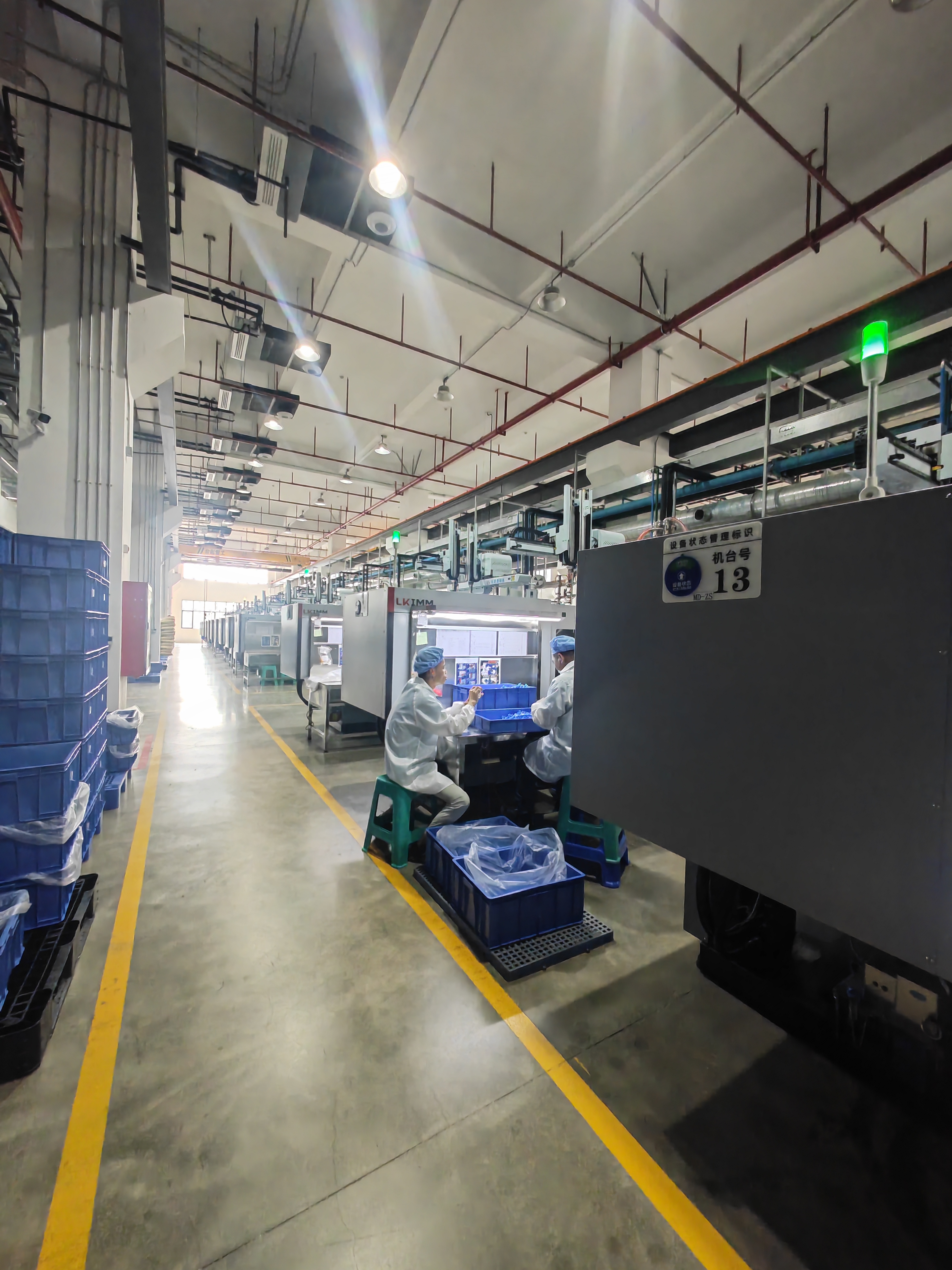
The photograph here shows this side of manufacturing clearly.
Long rows of injection molding machines fill the production floor, with marked working routes, material containers, operators, and supporting systems working together.
This is where a toy order stops being a design file and becomes thousands of physical products.
Daily Production Work Is What Keeps Large Orders Moving
Large toy orders are rarely completed by one machine or one person.
Production depends on many small activities being handled correctly every day.
Machine settings need to remain within the required production range.
Materials need to reach the correct production area.
Molded components need to be collected without mixing different orders.
Operators need to identify unusual conditions quickly.
Quality checks need to happen during production rather than only after everything has been completed.
None of these tasks looks particularly impressive from outside the factory.
Together, they determine whether production keeps moving smoothly.
Injection Molding Creates the First Real Production Test
For many plastic toys, injection molding is where production consistency starts to become measurable.
The approved sample may look perfect.
Mass production asks a different question:
Can the same result be repeated thousands of times?
Product dimensions, surface appearance, color, part fit, and molding consistency all need to remain within the agreed requirements.
This is why factory teams pay attention to the production process while machines are running.
When something changes, early action is much easier than discovering the issue after a large quantity has already been produced.
Operators Still Matter in Automated Production
Modern equipment can automate many parts of plastic toy manufacturing.
People still matter.
Operators work around the machines, handle molded parts, observe production conditions, move components, and report problems when something does not look right.
The workers visible in this production photo are part of that daily process.
Automation helps improve production efficiency.
Experienced operators help keep the process practical.
The two work together.
For overseas customers, this is worth understanding because factory automation does not mean production can simply be left unattended.
Material Handling Can Affect Order Consistency
Blue production containers appear throughout the workshop.
They are part of the factory's everyday material movement system.
Molded parts need to be collected, transferred, stored, checked, and moved to the next operation.
When several products are running at the same time, separation becomes important.
Different colors, components, product versions, or customer orders should not be treated as one large pile of plastic parts.
Controlled material movement reduces confusion and makes production easier to track.
Production Floor Discipline Is Not Just About Appearance
Clean floors and marked production routes look good in factory photographs.
Their practical value is more important.
Clear routes help people move materials without blocking working areas.
Defined machine positions make equipment easier to access.
Organized storage reduces unnecessary movement.
Visible production information helps teams understand what is running.
These details may seem small.
During a large OEM order, they become part of everyday efficiency.
Factory management is often built from these small routines rather than from one impressive piece of equipment.
Production Problems Need to Be Found Early
No manufacturing process runs perfectly every minute.
The important point is how quickly a problem is identified.
Possible issues can include:
- Molding variation
- Color inconsistency
- Part deformation
- Material problems
- Machine stoppage
- Component mix-ups
Early detection gives production teams more options.
They can check the machine.
Review the material.
Inspect affected parts.
Adjust the process.
Hold questionable components before they move further into production.
This is much easier than discovering the same issue during final packing.
Factory Output Needs to Match the Delivery Plan
Production volume has a direct connection with delivery.
If production output falls behind schedule, later processes also move back.
Inspection may be delayed.
Assembly may wait for components.
Packaging may have to be rescheduled.
Container loading can eventually be affected.
For export toy orders, delivery planning therefore starts on the production floor.
Production teams need to know what quantity is required, what equipment is available, what materials are ready, and when the order needs to move into the next stage.
This is where real factory scheduling becomes more important than simply quoting a delivery date.
Repeat Orders Reveal Real Manufacturing Capability
First production runs receive plenty of attention.
Repeat orders tell another story.
When customers reorder the same plastic toy months later, the factory needs to reproduce the product with the same basic requirements.
That means production information, tooling, materials, quality references, and manufacturing experience need to remain usable over time.
For overseas brands and retailers, repeatability is valuable.
Nobody wants to rebuild the entire manufacturing process every time an existing product is reordered.
Large Retail Programs Put More Pressure on Production
Retail and promotional toy programs can involve high quantities with fixed launch dates.
Production cannot simply slow down because one part of the process was not prepared properly.
Material availability, machine scheduling, inspection capacity, packaging requirements, and shipment timing all become connected.
This is particularly relevant for supermarket promotional toys, promotional giveaways, character products, and other high-volume programs.
Factory experience becomes useful when these pressures appear at the same time.
Real Factory Photos Tell More Than Equipment Lists
A machine list can tell buyers what equipment a supplier owns.
Factory photographs can show how that equipment is actually used.
The production floor shown here gives a clearer picture of daily manufacturing:
Machines are arranged in long production lines.
Working routes are clearly marked.
Materials are kept in dedicated containers.
Operators work directly beside production equipment.
Production continues across a large manufacturing area.
For overseas buyers evaluating an OEM plastic toy manufacturer, these details provide useful context that a product catalog cannot show.
Meida Toys Keeps Production Connected With Customer Requirements
Meida Toys operates as a factory-based OEM and ODM toy manufacturer, supporting custom plastic toy production for global brands, retailers, promotional programs, and distributors. The company's current site describes in-house engineering, injection molding, assembly, quality inspection, and export production capabilities.
The production environment shown in these photographs is part of that manufacturing system.
Our focus is not simply producing one approved sample.
It is keeping the same product requirements connected to daily production, quality inspection, material handling, packaging, and shipment preparation.
For buyers looking for [Custom Plastic Toy Manufacturing], this is the part of the process that matters after the quotation has been accepted and production has actually started.
For factory standards, compliance information, and manufacturing qualifications, visit [Factory Certifications & Compliance].
Frequently Asked Questions
What happens during mass production of plastic toys?
Production teams operate injection molding equipment, manage materials, monitor molded parts, perform in-process checks, and move components through the required production stages.
Why are production checks needed during manufacturing?
Checking products during production helps identify problems early, reducing the risk of large quantities requiring rework or replacement.
Do operators still matter when toy factories use automated equipment?
Yes. Automation improves efficiency, but operators remain important for equipment monitoring, material handling, visual checks, and responding to unusual production conditions.
How does production management affect delivery time?
Production output directly affects inspection, assembly, packaging, and shipment preparation. Strong production scheduling helps keep each stage connected with the required delivery date.
Can Meida Toys support repeat OEM plastic toy orders?
Yes. Meida Toys supports custom OEM and ODM toy production for overseas brands, retailers, promotional programs, and distributors.