


Plastic Toy Production Starts Before Injection Molding
When buyers review custom plastic toy suppliers, they often focus on finished samples, injection molding machines, production capacity, and unit prices.
However, many important manufacturing activities take place before plastic enters the molding machine.
Tooling preparation, machining work, equipment maintenance, and technical adjustments all contribute to the final production result.
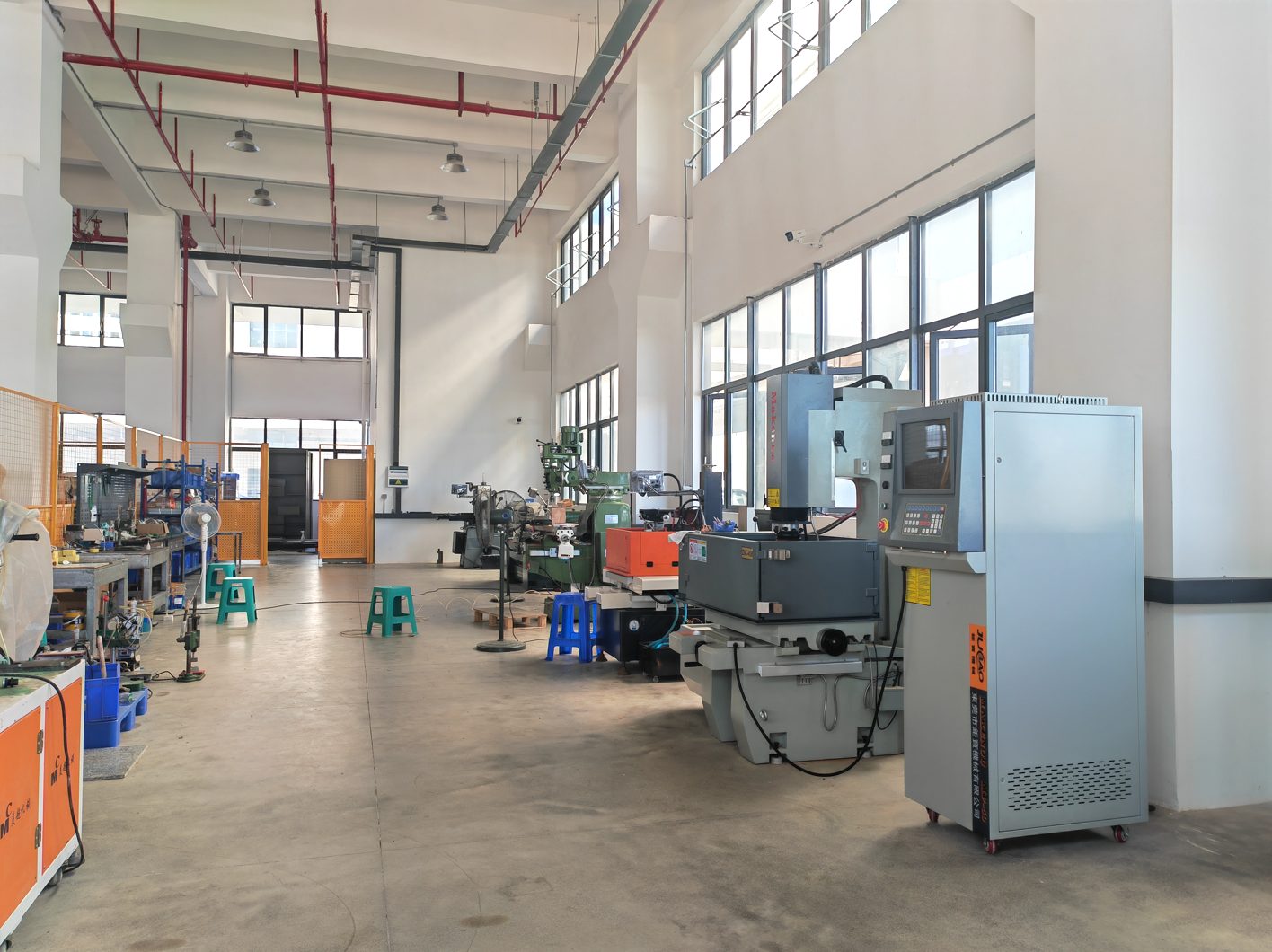
The two photographs show an industrial working area at Meida Toys. The space contains machining equipment, workstations, and supporting machinery used for technical manufacturing activities.
These areas may not appear in a finished product catalogue, but they form part of the working environment behind custom toy production.
Tooling Has a Direct Effect on Toy Quality
For many plastic toys, the mold determines the basic shape, dimensions, surface details, and connection points of each component.
If the tooling is not prepared correctly, problems may appear during injection molding or assembly.
Typical issues can include:
- Inconsistent part dimensions
- Poor fitting between components
- Unwanted surface marks
- Difficult assembly
- Repeated adjustments during production
- Additional sampling or tooling costs
For this reason, tooling requirements need to be considered early in the development stage.
A toy design may look complete on a computer screen, but its structure still needs to be suitable for actual manufacturing.
At Meida Toys, product development and production requirements need to work together so that approved designs can be transferred into practical manufacturing.
Machining Support Creates More Control During Development
The equipment shown in the photographs represents a different side of toy manufacturing.
Unlike an injection molding line, a machining area is associated with metalworking, equipment preparation, technical adjustments, and other supporting manufacturing tasks.
Depending on the project, this type of working environment can support activities related to tooling, fixtures, component preparation, or equipment maintenance.
The exact requirements depend on product structure, mold design, material selection, and production volume.
For custom plastic toys, technical support is particularly important when products include:
- Small or complex shapes
- Multiple connecting parts
- Detailed character features
- Tight assembly requirements
- Special surface details
- Several size or color variations
A small tooling adjustment made during development can help avoid larger problems after mass production begins.
Custom Toy Designs Need Manufacturing Consideration
OEM and ODM toy projects often begin with artwork, sketches, 3D models, or customer samples.
These materials communicate the intended appearance of the product. They do not always explain how every component should be manufactured.
Engineering teams may need to review:
Product Structure
The team needs to consider how different components fit together, where connecting points should be placed, and whether the design can be produced consistently.
Mold Requirements
The shape of the product affects mold structure, parting lines, draft angles, and production difficulty.
Material Selection
Different plastics have different processing characteristics. Material choice can influence product strength, surface appearance, flexibility, and molding conditions.
Production Efficiency
A design that is difficult to mold, trim, assemble, or inspect may increase production time and manufacturing costs.
Early technical review helps identify these issues before the project moves too far into production.
Factory Equipment Is Only One Part of Manufacturing Capability
A factory’s equipment list provides useful information, but it does not tell the whole story.
The more important question is how the equipment is used within the complete production system.
For a custom plastic toy order, several departments may need to work together:
- Product design and development
- Engineering
- Tooling and technical support
- Injection molding
- Surface finishing
- Assembly
- Quality inspection
- Packaging
- Production planning
Machining equipment, injection molding machines, and assembly workstations serve different purposes.
Their value comes from how they support the overall manufacturing process.
For overseas buyers, this is an important point when evaluating an [OEM Plastic Toy Manufacturer]. A factory should be assessed not only by its machinery, but also by its ability to connect technical preparation with stable mass production.
Meida Toys: Supporting Custom Manufacturing From Development to Production
Meida Toys operates as a factory-based OEM and ODM toy manufacturer, supporting custom plastic toy projects for brands, retailers, promotional programs, and distributors.
Our manufacturing environment includes technical work areas, production equipment, engineering support, injection molding operations, and quality management activities.
The photographs show an industrial side of the factory that is rarely visible in finished product photography.
For Meida Toys, manufacturing is not limited to producing the final toy. It also involves preparing the technical conditions required to produce that toy consistently.
This approach is especially relevant when a project involves custom molds, detailed components, multiple product variations, or large production quantities.
Buyers can learn more about our manufacturing capabilities through [Custom Plastic Toy Manufacturing] and review relevant information through [Factory Certifications & Compliance].
Technical Preparation Helps Reduce Production Problems
Production problems are not always caused by the injection molding process itself.
Some issues begin earlier, during product design, tooling preparation, or equipment setup.
A technical problem identified during development is usually easier to address than the same problem discovered after thousands of components have been produced.
Effective preparation can help reduce:
- Unnecessary tooling changes
- Repeated sample development
- Component fitting problems
- Production interruptions
- Material waste
- Delays during assembly
This is why practical manufacturing experience matters when developing custom plastic toys.
The final product may be small, but the work required to produce it accurately can involve many different technical steps.
Frequently Asked Questions
Why is tooling important in plastic toy manufacturing?
Tooling determines the shape, dimensions, surface details, and fitting structure of molded plastic components. Proper tooling preparation helps support consistent production and smoother assembly.
What is the role of machining equipment in a toy factory?
Machining equipment can support metalworking, tooling-related activities, technical adjustments, fixtures, equipment maintenance, and other manufacturing support tasks, depending on factory requirements.
Should engineering review a toy design before mold production?
Yes. Engineering review can identify structural, material, tooling, assembly, and production concerns before they create additional costs or delays.
Can Meida Toys support custom plastic toy development?
Meida Toys provides OEM and ODM toy manufacturing support for custom plastic toy projects, including product development, technical coordination, production, and quality management.
What should buyers check besides injection molding capacity?
Buyers should also review engineering support, tooling preparation, production organization, quality inspection, assembly capability, material management, and delivery planning.