



Plastic Space Capsule Models: Mold Design, Assembly and Quality Control
Collectible Toys Require Accurate Component Fitting
Modern blind box products and collectible plastic models often contain multiple parts rather than relying on single-piece construction. Transparent windows, internal figures, molded exterior structures and interlocking components all need to work together within a compact design.
For overseas toy brands, IP developers and promotional buyers, this type of product creates several manufacturing considerations. Small dimensional differences can affect component fitting, visible seams, surface quality and final assembly.
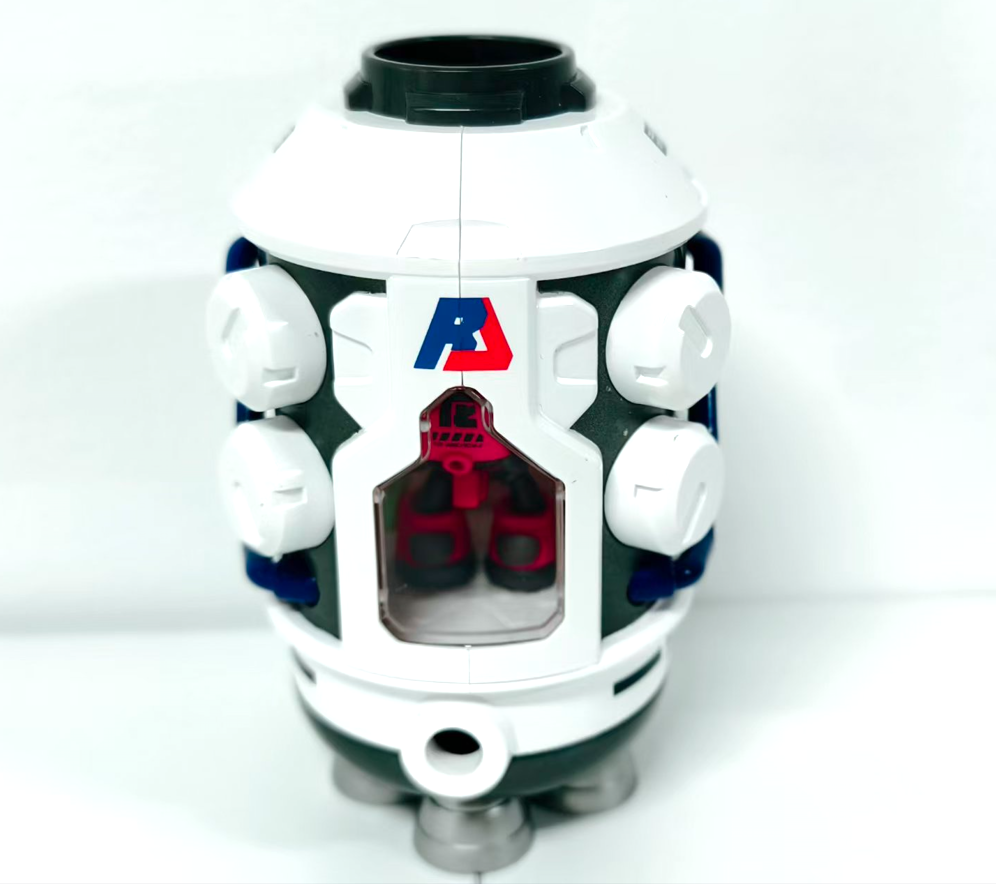
The five photographs show a completed space capsule plastic assembly model developed for custom toy manufacturing. The model includes a transparent front window with an astronaut figure inside, multiple exterior structural components and four molded thruster nozzles on the base.
These features make the product a useful example of how mold design, injection molding and assembly control work together during plastic toy production.
Key Manufacturing Considerations for Multi-Part Plastic Models
Clear Plastic Components
Transparent windows require suitable clear plastic material and controlled injection molding conditions to maintain consistent appearance and dimensional stability.
Mold surface quality, gate location, venting and processing conditions can all affect the appearance of transparent components. Proper handling during assembly is also important to reduce dust, fingerprints and surface scratches.
Component Tolerances
The main capsule body contains several sections that need to fit together accurately. Mold shrinkage, wall thickness and part dimensions all influence the final assembly.
During engineering review, these factors are considered before tooling begins. Appropriate tolerances help maintain consistent fitting during mass production while avoiding excessive force during assembly.
Exterior Molded Structures
The pipes, ribs and other exterior structures shown on the capsule require careful mold construction.
Depending on part geometry, tooling may require sliders, lifters or other mold mechanisms to release undercut areas correctly. Parting line locations also need to be considered so visible surfaces remain clean after molding.
Thruster and Base Structure
The bottom of the model contains four molded thruster nozzles. Small openings and fine edges require appropriate wall thickness and ejection design.
If wall thickness is not properly controlled, injection-molded parts may experience sink marks, warping or dimensional variation. Mold design therefore plays an important role in maintaining the appearance and fit of these smaller structures.
Engineering Review Before Tooling
Before injection mold production begins, engineering teams review customer 3D files and product specifications to identify potential manufacturing issues.
At Meida Toys, product development can include evaluation of:
Draft Angles and Wall Thickness
Appropriate draft angles help parts release from the mold without damaging exterior surfaces. Consistent wall thickness also helps reduce the risk of sink marks and warping during injection molding.
Parting Line Placement
Parting lines can be positioned along natural product seams or less visible areas where possible. This helps maintain cleaner surfaces on important visual areas of the finished model.
Material Selection
Material selection depends on product structure, appearance, flexibility, durability and target market requirements.
Rigid plastics can be used for structural components, while suitable flexible materials may be selected for character or soft components. Clear plastic materials can be considered for transparent windows and display elements.
From Mold Development to Final Assembly
A custom plastic toy project requires quality control throughout different production stages.
1. Tooling and Mold Machining
CNC machining, EDM and mold polishing are used according to product structure and surface requirements. Tooling accuracy directly affects dimensional consistency during injection molding.
2. First Article Sampling
Initial samples are reviewed for dimensions, component fitting, surface finish, color, appearance and overall assembly. Design or tooling adjustments can be made before mass production approval.
3. Controlled Assembly and Handling
Internal figures, capsule shells and transparent components are assembled with appropriate handling procedures. Special care is taken with clear parts to reduce scratches, fingerprints and contamination during assembly.
4. Quality and Compliance Checks
Toy safety and compliance requirements depend on the target market, product design, materials and customer specifications. Applicable requirements may include standards such as ASTM F963, EN71, CPSIA and REACH.
Testing and inspection requirements are confirmed during product development and production planning according to the destination market.
Meida Toys for Custom Plastic Toy Manufacturing
Meida Toys provides OEM and ODM manufacturing for custom plastic toys, blind box products, promotional toys and collectible models.
Our production process covers product development, tooling coordination, injection molding, printing, assembly and quality inspection. Customer-supplied 3D files can be reviewed for production feasibility, while custom projects can also be developed from artwork, sketches or product concepts.
For buyers developing multi-component plastic toys, early engineering review can help identify mold, material and assembly issues before mass production.
Technical Preparation Helps Reduce Production Problems
Manufacturing issues are easier to address during product development than after tooling and mass production have started.
Reviewing part structure, wall thickness, mold release, component tolerances and assembly requirements at an early stage can help reduce re-tooling, production delays and material waste.
Whether the project involves space-themed collectibles, blind box figures or promotional plastic toys, a structured development process helps maintain consistency from the first sample through mass production.
Frequently Asked Questions
What materials are commonly used for space capsule and blind box models?
Material selection depends on product structure, appearance and functional requirements. ABS and other rigid plastics are commonly considered for structural components, while suitable clear plastics can be used for transparent windows. Flexible materials may be selected for specific character or soft components.
How does Meida Toys ensure fitting accuracy for multi-part plastic models?
Engineering review considers part dimensions, material shrinkage, wall thickness and assembly tolerances before tooling. Initial samples are then checked for component fitting and overall assembly before mass production.
Can Meida Toys support both OEM and ODM custom toy projects?
Yes. Meida Toys can support OEM projects based on customer-supplied drawings or 3D CAD files, as well as ODM development based on artwork, sketches, product concepts or physical references.
How are transparent parts protected during assembly?
Transparent components are produced using suitable mold surface finishes and handled carefully during production. Protective materials and appropriate assembly procedures can be used to reduce scratches, fingerprints and dust contamination.
Which toy safety standards can Meida Toys support for custom plastic toys?
Toy safety requirements depend on the destination market, product design, materials and customer specifications. Meida Toys can support applicable requirements such as ASTM F963, EN71, CPSIA and REACH during product development and compliance testing.
#Plastic Toys, #Blind Box Toys, #Toy Manufacturing, #OEM Toys, #ODM Toys
Ready to manufacturing your custom plastic toys?
Contact Meida Toys engineering team for a 3D CAD review.