


Production Capacity Starts With the Production Floor
When overseas buyers look at finished toy samples, most of the manufacturing process remains invisible.
They see the final product.
Inside the factory, production involves machines, molds, materials, operators, process settings, inspection points, storage areas, maintenance work, and production schedules.
These two production-floor views show part of that environment at Meida Toys.
Rows of injection molding machines run through the workshop, with material supply lines, marked production routes, lifting equipment, work areas, and component handling space arranged around the production process.
For custom plastic toy manufacturing, this physical setup matters because production capacity is not simply measured by how many machines a factory owns.
Injection Molding Runs at the Core of Plastic Toy Production
Most molded plastic toys begin with controlled injection molding.
The mold determines the basic shape.
The machine controls the molding cycle.
Material preparation, temperature, pressure, cycle time, mold condition, and machine settings all influence the finished component.
Small variations can affect dimensions, surface appearance, fit between parts, or later assembly.
This is why injection molding requires process control rather than simply running machines at maximum speed.
Our production floor is arranged for continuous molding work, giving production teams access to equipment, material supply, work areas, and inspection points during daily operations.
Machine Layout Influences Production Flow
The first image shows long rows of molding equipment with clear routes between production areas.
This arrangement is not only about keeping the workshop visually organized.
Production layout affects how materials enter the process, how molded components are moved, how operators access machines, and how finished parts reach the next stage.
Clear production routes also make it easier to manage material movement during larger OEM orders.
When multiple products are running at the same time, organized flow becomes especially important.
It helps production teams keep different orders separated while maintaining a steady manufacturing rhythm.
Material Supply Needs Consistent Control
Plastic toy production depends on stable material supply.
Resin preparation, material movement, drying requirements, color matching, and machine feeding can all affect molding performance.
The overhead material delivery systems visible above the injection molding machines help support continuous production.
For OEM projects, material management also needs to match customer specifications.
Different products may require different plastic materials, colors, grades, or processing conditions.
Keeping these requirements controlled helps reduce unnecessary variation between production batches.
Process Control Matters More When Order Volume Increases
Small production runs can sometimes hide manufacturing weaknesses.
Large orders expose them quickly.
When production reaches tens of thousands of units, even a small process variation can create a significant number of affected parts.
That is why stable production conditions become more important as order volume increases.
Meida Toys manages production through equipment control, standardized operating procedures, material handling, process monitoring, and inspection during manufacturing.
The objective is not simply producing more pieces.
The objective is keeping production predictable while volume increases.
Equipment Maintenance Protects Production Stability
Production equipment works continuously during large OEM programs.
Regular maintenance helps reduce unexpected stoppages and keeps machines operating within expected conditions.
Equipment condition can affect molding consistency, production speed, energy use, and delivery schedules.
For buyers, this is one of the less visible parts of supplier capability.
A production schedule may look realistic on paper, but equipment downtime can quickly change the situation.
Factory-level maintenance and production planning help reduce this risk.
Different Processes Require Different Production Conditions
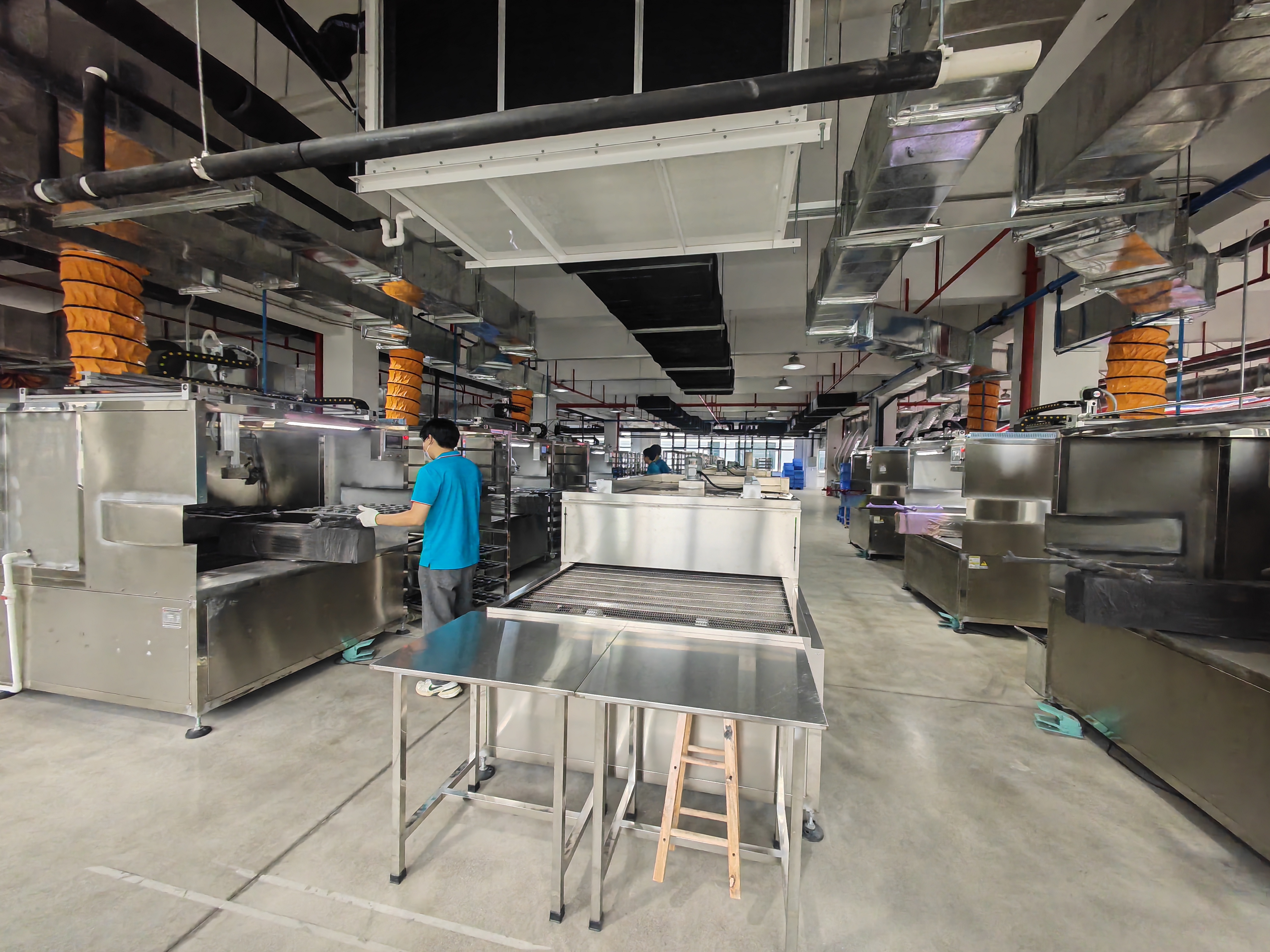
The second image shows another section of the manufacturing environment, with stainless-steel processing equipment, ventilation systems, material handling areas, and operators working around the equipment.
Not every production stage looks like an injection molding machine.
Depending on product requirements, plastic toy manufacturing can involve additional processing, cleaning, finishing, assembly, or preparation steps.
Each process needs suitable equipment and controlled working conditions.
This is particularly important for custom toy projects where the product cannot simply follow one standard production route.
Quality Starts With Process Stability
Final inspection remains important, but product quality is influenced much earlier.
Stable molding conditions reduce variation.
Controlled material handling reduces mix-ups.
Correct process settings reduce manufacturing defects.
Proper operator procedures improve repeatability.
Quality teams then verify products during production and before shipment.
This layered approach is more practical than depending entirely on final inspection.
For overseas buyers, process control provides an important advantage: problems can be identified while production is still running instead of after the entire order has been completed.
Production Planning Connects Capacity With Delivery
Machine capacity only becomes useful when it is connected to realistic scheduling.
Before taking on large OEM orders, production planning needs to consider:
- Order quantity
- Product complexity
- Tooling availability
- Material preparation
- Machine allocation
- Processing time
- Inspection requirements
- Packaging schedule
These factors determine whether a requested delivery date is realistic.
For promotional toys, retail launches, and seasonal products, production timing can directly affect the customer's sales plan.
Factory planning therefore becomes part of the service provided to the buyer.
Custom Plastic Toys Need Flexible Manufacturing
OEM customers rarely order identical products.
One project may involve small collectible figures.
Another may require promotional toys for a supermarket campaign.
Another may involve multiple plastic components requiring assembly and finishing.
Different products create different manufacturing requirements.
A capable plastic toy manufacturer needs enough process knowledge to adjust production around those requirements rather than forcing every project into the same manufacturing method.
That flexibility is especially valuable for buyers developing new products rather than purchasing standard catalog items.
What Overseas Buyers Can Learn From a Factory Floor
A production photograph cannot show everything.
It can, however, reveal useful information.
Buyers can look at:
- Equipment density
- Production organization
- Material handling
- Working space
- Machine condition
- Process routes
- Operator involvement
These details provide more practical information than generic claims about factory capability.
For long-term OEM cooperation, understanding how a supplier actually produces goods is worth more than simply comparing unit prices.
Meida Toys: Manufacturing Behind Custom Plastic Toy Orders
Meida Toys supports custom plastic toy production for overseas brands, retailers, promotional programs, and distributors.
Our manufacturing environment combines injection molding equipment, supporting processing systems, production teams, quality control, material management, and export-order coordination.
The equipment shown in these photographs represents the working environment behind customer orders—not a showroom prepared only for factory visits.
For buyers developing custom plastic toys, the important question is not simply whether a factory can produce the first sample.
It is whether the factory can maintain controlled production when the order becomes large, the schedule becomes tight, and the same product needs to be reproduced consistently.
That is where real manufacturing experience matters.
Frequently Asked Questions
What equipment is used in plastic toy manufacturing?
Injection molding machines form the core of many plastic toy production lines. Supporting equipment handles material supply, processing, handling, finishing, assembly, and other project-specific requirements.
Why does injection molding process control matter?
Molding conditions directly influence dimensions, appearance, part fit, and production consistency. Stable process control helps maintain the approved product standard across larger production batches.
Can Meida Toys handle large-volume OEM toy production?
Yes. Production planning, equipment allocation, material preparation, process monitoring, and quality inspection are coordinated according to each OEM project's requirements.
Does custom toy production follow the same process for every product?
No. Product structure, materials, tooling, finishing, assembly, packaging, and order volume can all change the manufacturing route.
What should overseas buyers look for when reviewing a toy factory?
Look beyond machine numbers. Production organization, material handling, process control, equipment condition, quality management, and delivery planning provide a more useful picture of manufacturing capability.