



The Biggest Manufacturing Risks Usually Don't Appear in the Quotation
When buyers begin an OEM toy project, discussions usually revolve around unit price, tooling costs, and delivery schedules.
Those topics are important, but they rarely determine whether a project runs smoothly.
The biggest challenges often appear weeks later—after tooling has been approved and production is underway.
By then, changing suppliers is no longer practical.
That's why experienced buyers spend time understanding how a factory actually manufactures plastic toys before signing the purchase order.
Injection Molding Is the Foundation of Every Plastic Toy
Every molded plastic toy starts with the same goal: producing thousands of identical parts with minimal variation.
That sounds simple.
In reality, maintaining dimensional consistency over a long production run requires much more than a good mold.
The production environment, machine stability, process control, and operator experience all influence the final result.
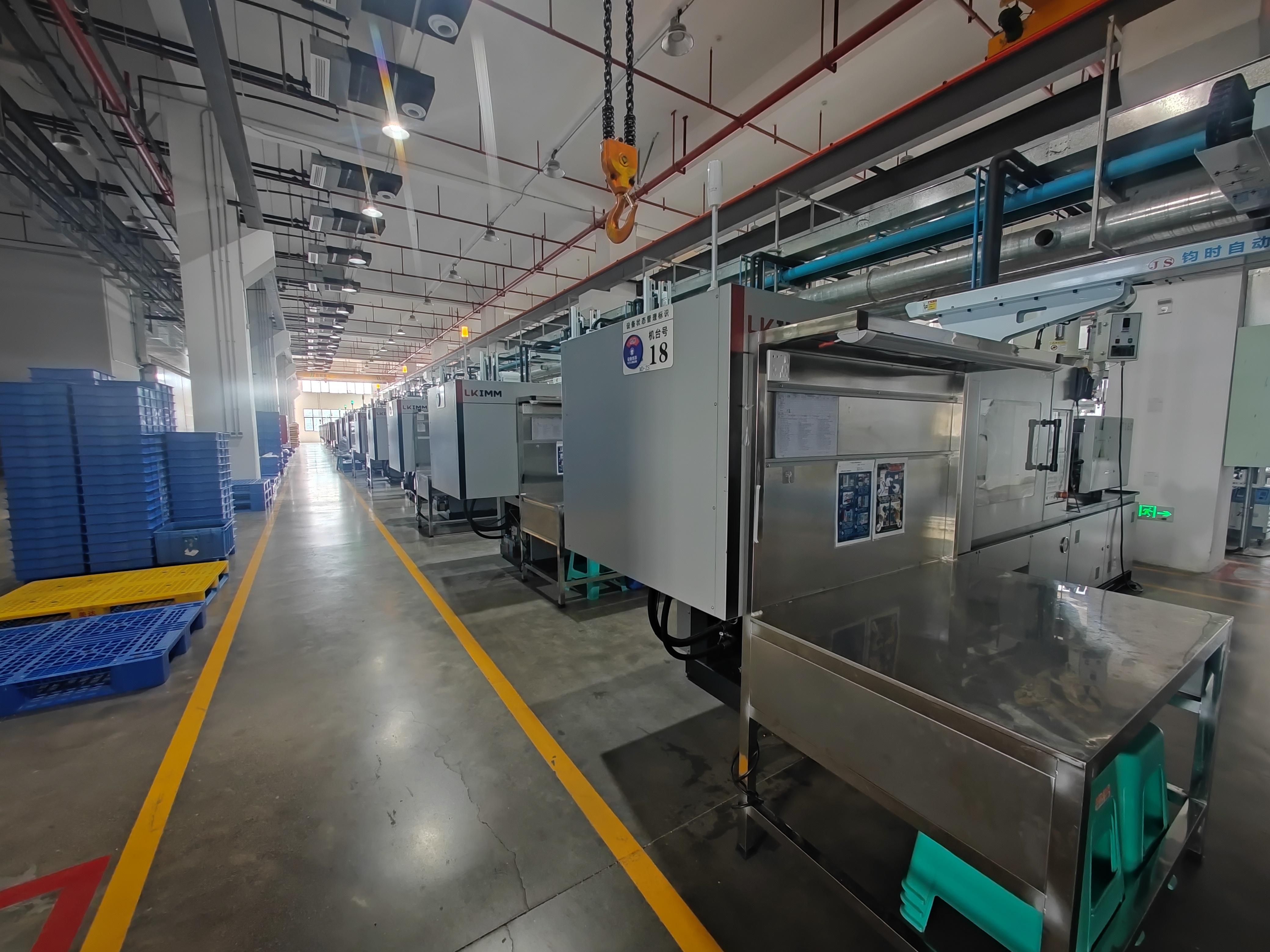
Our injection molding workshop is designed to support continuous production with dedicated molding machines arranged in organized production cells. Each machine follows documented processing parameters to help maintain stable quality from the first cycle to the last.
Modern Equipment Reduces Variation, Not Just Labor
Many buyers associate automation with higher production speed.
Speed is only part of the story.
Modern injection molding equipment also improves process repeatability.
Automatic material feeding, robotic part handling, and stable machine settings reduce unnecessary variation that can occur during manual operations.
For products with tight assembly requirements or cosmetic surfaces, consistent processing is often more valuable than producing parts faster.
This is one reason we continue investing in equipment upgrades instead of relying on older production methods.
Production Capacity Should Never Be Measured by Machine Count Alone
A factory may have dozens of molding machines.
That doesn't automatically mean it can deliver your project successfully.
Capacity also depends on:
- Production scheduling
- Tool maintenance
- Material preparation
- Engineering support
- Machine utilization
- Preventive maintenance
Well-managed production keeps machines running efficiently while minimizing unexpected downtime.
For buyers working with promotional campaigns or retail launch dates, this operational stability is just as important as production volume.
Tooling Maintenance Is Often Overlooked
One topic that rarely appears in supplier presentations is mold maintenance.
Yet it has a direct impact on product quality.
As molds wear over time, flash, dimensional variation, and surface defects become more likely if preventive maintenance is ignored.
For long-running OEM projects, regular mold inspection and servicing help maintain consistent quality throughout the entire production cycle.
It's one of those behind-the-scenes activities customers rarely see—but immediately notice if it's missing.
Manufacturing Doesn't End When the Parts Leave the Machine
Producing plastic components is only one stage of the process.
Each batch still moves through several important checkpoints before becoming a finished product.
These typically include:
Visual Inspection
Checking for short shots, flash, sink marks, or cosmetic defects.
Functional Verification
Ensuring molded components fit correctly during assembly.
Process Traceability
Recording production information so any issues can be traced back to specific production batches if needed.
By monitoring production continuously instead of relying solely on final inspection, we reduce the risk of larger quality issues later.
Good Communication Begins Before Production Starts
Many manufacturing problems don't begin on the factory floor.
They begin during project planning.
Clear engineering discussions before production help avoid misunderstandings about materials, tolerances, colors, packaging, or assembly methods.
Our engineering and production teams review customer requirements before tooling enters production, allowing potential concerns to be identified early.
Preventing problems is always more efficient than correcting them after production begins.
Why Experienced Buyers Return to the Same Factory
Repeat customers rarely come back because of one successful shipment.
They return because the manufacturing process becomes predictable.
They know:
- Production follows an organized workflow.
- Engineering support is available when changes arise.
- Quality standards remain consistent across different orders.
- Communication stays transparent throughout production.
That level of consistency builds confidence over time.
Final Thoughts
OEM toy manufacturing is not simply about producing plastic parts.
It's about building a manufacturing process that delivers the same quality, shipment after shipment.
For buyers, the details hidden inside the production workshop often determine whether a project succeeds long before the finished products are packed into cartons.
Understanding those details helps reduce risk, improve communication, and create stronger long-term partnerships.
What is the most important stage in OEM plastic toy manufacturing?
Injection molding is the foundation because every following process depends on the consistency of molded components.
Can modern equipment improve product quality?
Yes. Advanced molding equipment helps maintain stable processing conditions, improving consistency throughout production.
Why is mold maintenance important?
Regular maintenance helps reduce wear, prevent dimensional variation, and extend tooling life during long production runs.
Do you support custom OEM plastic toy projects?
Yes. We manufacture custom plastic toys based on customer drawings, 3D files, or physical samples for promotional, retail, and collectible markets.